9 p.m.
The room fills. The counter holds, two people are enough, you still talk to guests.

Three people behind the counter serve as fast as they can, the queue keeps growing. And when another drink means rejoining the whole queue, some guests simply drop it.
A second lane, supervised by you: some guests pour at the wall while the counter keeps running. You keep the hand on everything.
9 p.m.
The room fills. The counter holds, two people are enough, you still talk to guests.
10 p.m.
Everyone wants another drink at the same time. Three people serve flat out, the queue passes the end of the counter. Nobody is on the floor.
10 p.m., with the wall
You open the wall. Some guests pour there, the counter serves the others. Someone watches the wall from the bar and cuts if needed. The queue still exists — it is no longer the only path.
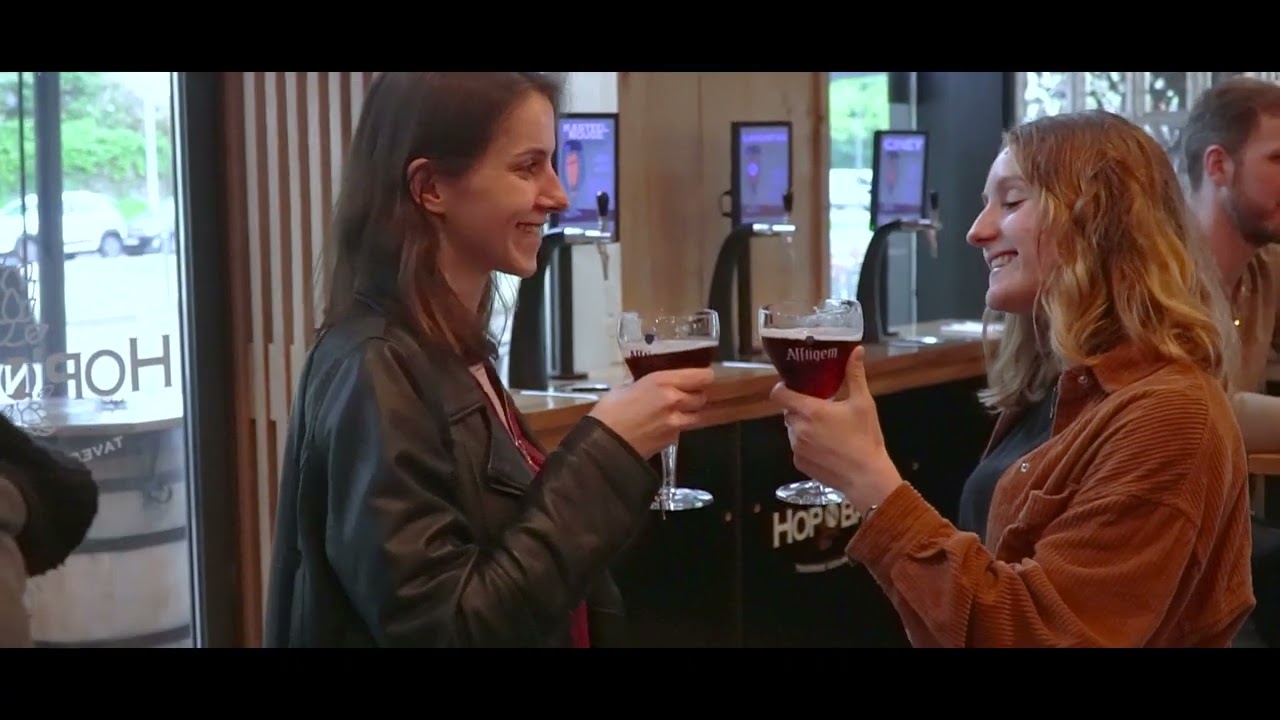
As an extension of the counter, on a free wall, or as an island. People need to circulate in front and restock behind without crossing the room with a keg. The number of taps is decided on your real rushes, not on an average.
Hop'n Bar has been operated in a bar in Pau: supervised service, several thousand pours recorded, one venue. What that does not prove: that it will work the same in your bar. We publish neither revenue nor minutes saved.
The queue forms at the same hours every week. The team is already flat out at the peaks. There is room for a second lane.
The room is listed or tightly constrained. Power is limited. Activity is very irregular.
No, and we do not recommend it. The team's eye is what makes self-pour acceptable on the floor.
It depends on the format and your circulation. We look on plan or on site.
Nothing is promised on that point today. Your assumption is collected, then discussed.
Seven questions, one minute, no contact details asked.
Prefer to talk it through?